

GTM or GTFO - Youth is Served
Worshipping At The Wrong Altar | GTM or GTFO
The Average Successful Founder Is 45. We Keep Celebrating 22.
The startup world has spent 20 years worshipping at the wrong altar.
The story we tell about founders goes like this: brilliant, young, slightly reckless, operating on instinct and energy and a refusal to quit. Twenty-two years old and disrupting an industry they’ve never actually worked in. The Forbes list. The TechCrunch profile. The seed round closed before the product exists. We have turned this archetype into mythology, and the mythology is costing companies real money.
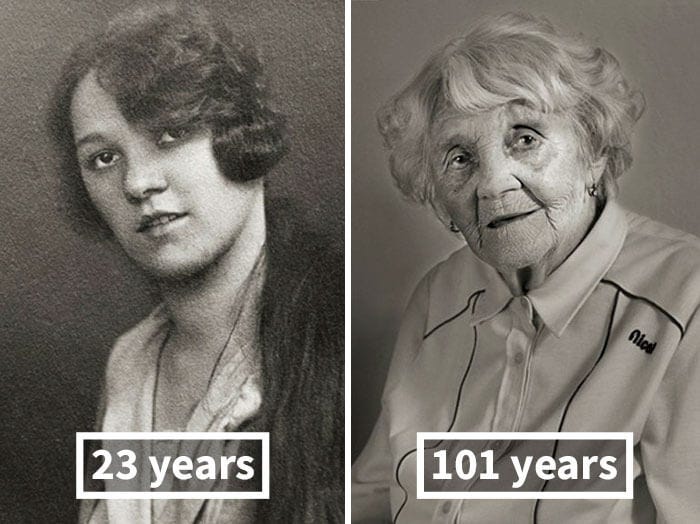
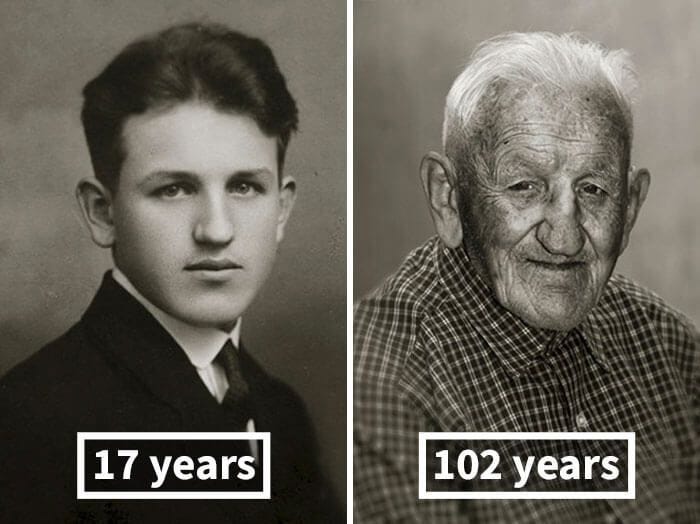
Here is the number that gets quietly ignored in all of it: the average age of a successful startup founder, according to research out of Harvard Business Review, is 45. Not 25.
The average startup founder is not the person who built the app in their dorm room. It’s the person who has spent two decades inside industries, inside organizations, inside deals that worked and deals that fell apart, building the kind of pattern recognition that you cannot manufacture.
Ray Kroc was 52 when he started McDonald’s. Vera Wang launched her fashion line at 40. Sam Walton opened the first Walmart at 44. Colonel Sanders franchised KFC at 62. These are some of the most commercially successful businesses in modern history, and they were built by people who had spent long enough in the world to understand it before they tried to change it.
Now, I am not remotely trying to compare myself to those icons. But I spent 17 years at Nielsen and 10 more at other companies, testing, learning, hitting some home runs and falling down a lot. And then I started weitzmanGTM at 43.
I was 48 when I co-founded PORCH with Hunter, which came directly out of watching what accelerators consistently get wrong and deciding I had seen enough to try something different to help immigrant entrepreneurs. Neither of those companies is a unicorn and never will be. That is not the point. The point is that neither of them could have existed without the specific accumulation of failures, relationships, and hard-won judgment that came from the years before them.

Youth cannot fake what experience gives you.
The conversation usually stops at "you've seen more." But that undersells what's actually happening.
When you've spent real time inside organizations, you develop something that every operator recognizes immediately: You can read a situation before it becomes a situation. You've watched enough deals die in the late stages to know which signals to take seriously. You've seen enough "innovative" ideas that were actually just old ideas with better branding. You've been in enough rooms where the strategy was beautiful and the execution was a disaster to know it will never succeed.
In GTM specifically, this matters more than almost anywhere else. The way buyers make decisions, the way organizations actually change their behaviour versus how they say they will, the difference between a champion who can move a deal and a champion who wants to but can’t: none of that is in a book. It comes from years of sitting across from real buyers in real situations.
A 24-year-old founder building a sales tool has read about buyer psychology (hopefully). A 46-year-old founder has been on both sides of that table, often in the same week, and has wins and losses on all sides to learn from.
There is also a relationship dimension that doesn’t get enough attention. The network you build over 20 years in an industry is not a contact list. It is a map of trust. People who will take your call when you have something new, and who will give you an honest read on whether your idea has legs. That is an extraordinarily valuable asset. It is also invisible to young founders.
Mythology has a cost.
The glorification of young founders is not just a harmless cultural preference. It shapes how capital gets allocated, how accelerators structure programs, and how experienced operators evaluate their own potential at a stage of their careers when they are actually most dangerous.
They looked at the dominant narrative, the TechCrunch cover stories and the 30 under 30 lists and the VC tweets about “founder energy,” and they concluded that the window had passed.
I have watched talented, seasoned people talk themselves out of starting something because they decided they were too old for it. One person in particular had spent 20 years inside enterprise software, knew the buyer, knew the gap in the market, had the relationships to get the first ten conversations without cold outreach. He looked at the TechCrunch cover stories and the 30 under 30 lists and the VC tweets about "founder energy," and he concluded that the window had passed. Last I heard, someone else had built the thing he described to me over dinner. That is real value that never got created because we have built a story about who founders are supposed to be, and that story overrides the evidence.
That is real value that never got created because we have built a story about who founders are supposed to be and that story overrides the evidence.
Still figuring it out
I am not writing this from a position of expertise. I will never feel like an expert. I feel confident in what I know. But that is different. My attitude is always be experimenting and learning. There is a company we are launching soon that I am genuinely uncertain about in the best possible way, the way you feel when you are doing something that matters enough to be scary.
There is no age at which you are supposed to have it figured out. There is also no age at which it becomes too late to start. What changes, as the years go on, is not your window. It is your advantage.
No Time To Do My Actual Job.
Have you ever thought “Holy shit, I don’t have time to do my job, my team won’t leave me alone!”?
Be honest. I know I have.
When that happens I have to remind myself, that 50% of my time should be spent actually talking to my team - 1:1s, coaching (real-time and scheduled), group meetings, setting tone and culture etc.
As a leader, the most important part of my job is helping my team to be successful. That means helping them learn, be happy and achieve their goals (their goals, not my goals).
Now that we have that settled. Let’s be clear on something. That does not mean I can’t find ways to be more efficient with my time and leverage technology to work smarter and to provide a better experience to my team.
A quick story about six reps couldn’t do discovery and it was leading to low conversion rates and a messy pipeline. Weekly role play sessions and a “culture of learning” was not enough.
The manager thoughts the AEs were technically solid. They had good product knowledge, motivated, not lazy, followed the process and worked hard. But their discovery was flat in a way that is hard to fix through observation alone. They were moving through their question list like a checklist, accepting surface answers, and jumping to demos before they earned the right. The real pain was not really surfaced and the lack of rapport and relationship building was obvious.
This team was doing some 1:1 role playing with the manager but it wasn’t getting the job done. The manager felt like it was taking up a lot of time and was clearly still not moving the needle.
I had been spending time in Avarra, when I heard this problem, I knew what would help.
A discovery coaching AI simulation using my own framework. The setup was not complicated. I quickly and easily built the AI model and avatar in about 10 minutes by;
Defining the buyer persona
Loading the context for a realistic deal scenario
Configured the AI avatar to behave the way real buyers actually behave: vague when the question was vague, resistant when the rep got assumptive, and unwilling to give up the real information until the rep earned
I didn’t want the AI to make it easy on the reps. No shortcuts and no polite hints. If the rep didn’t do a great job, the conversation went sideways.
Then I had the reps run it and the first few sessions were uncomfortable for most of them, which is exactly what I hoped. They were used to buyers who eventually volunteer the information, or managers who steer them back on track when they go off course. The sim did neither. It just reflected their behaviour back at them. A generic question got a generic answer and then the conversation quietly died. A rep who moved too fast lost the thread and had no one to blame for it. They had to think on their feet, recalibrate, and probe deeper just to keep things moving.
After a bunch of consistent repetitions, the difference was measurable.
They were sitting with silence longer and waiting for the answer instead of filling it. They were catching buying signals better. Their follow-up questions had more bite.
The manager still wanted to spend human to human 1:1 time with the reps but she now felt she can manage the time, scale the team and still be effective because the daily practice volume was happening inside Avarra instead of with her only.
The feedback the reps received was also incredible. The kind of granular, immediate, specific feedback that most reps only get from the very best managers, and only when that manager has the time and the bandwidth to give it.
The manager leveraged this feedback by discussing it in team meetings so everyone would see what good looked like.
Discovery is the part of the sale that most teams treat like a box to check. Ask the questions, take the notes, move forward. But the reps who actually understand what is going on inside a buyer’s business before the demo starts are the ones who close at a different rate. Sure some people are better at it naturally than others, but it is a coachable skill and it needs repetitions.
For the operators reading this who know their teams need sharper discovery, better qualification, improved objection handling or any number of skills - Pay attention to Avarra. DM me and I can share some examples.
Why GTM or GTFO Exists
GTM is full of big talkers, best practices and bullshit. Calendars are packed and tools are everywhere, but figuring out what works in ‘26 is difficult.
The good news is that the bar is low. Being elite is your moat.
GTM or GTFO exists to provide real learning, real talk and real smiles. Let’s do the work that matters and get sh!t done. GTM or GTFO.
PS If this was valuable, please share it , post it, comment on it, or DM me.
GTM or GTFO comes out every Saturday. See you next week.