

Audit Yourself First. The Data Second
GTM or GTFO | Should it be you on that PIP instead of your rep?
The Rep You’re About to PIP Might Be Your Best One
Pipeline generation is down for the second month running, and you know your leadership meeting is going to have a name or two pop up. The dashboard goes up on the screen and one rep’s row is red. And of course, Bob (the guy who never led a sales team before), says “shouldn’t that rep be on a performance plan?”
I sat in meetings like that for a long time in my career and I made the mistakes that Bob made. Find the person whose name sits next to the worst number, and start building a case.
Let me save you from that stupid mistake.
When you miss the target, blaming a rep on your team is often the path of least resistance. It is visible and satisfying, and it hands the board a name while giving the leader a feeling of control. A PIP allows you to tell a good story: the system works, this rep sucks, we are dealing with it. Everyone in the room exhales.
The trouble is that besides the fact that is poor leadership, it does not solve the problem. Pipeline generation sits at the very bottom of a process, and by the time you have the meeting where you “missed the target”, the problem actually happened three weeks earlier and several steps upstream.

The Upstream Block
Pipeline gets created when discovery calls convert to qualified opportunities. Discovery calls happen when meetings get booked. Meetings get booked when a rep connects with the right person and that person responds. And connecting depends on whether your team understands the buyer’s pain well enough to earn a reply, and whether the contact data they are working from is accurate.
So four or five things have to go right and miss any one of them an the whole thing fails. If you are only looking at the result and not the process, you are a poor revenue leader.
Some of these are skill problems. For example, a rep who can’t run discovery, or who leads with product instead of pain, needs coaching, and that is a real conversation worth having. A rep who sends generic messaging needs to learn from Samantha McKenna and her “Show Me You Know Me” system. Those two areas take learning and practice.
The beginning of the process is not skill; it’s basic plumbing and it’s pretty easy to check, but most leaders forget about it.
The Math Ain’t Mathing
Before you ever utter the words, or even think of a PIP, look in the mirror and ask yourself, how many contacts on your target list can your team actually reach? Not, how many records are in the system. How many have a verified mobile number and a deliverable email attached to a real person who still works there? Pull your top 100 accounts and 200 contacts and count. Now do the same with the bottom 100 that your new rep is practicing with.
If you have not done that before, be prepared for the results to be ugly. Your list might have been pulled about a year ago from a single data provider, dropped into the CRM, and treated as truth ever since. Nobody has paid attention to it other than using it to make calls and send emails. No quality checks, no re-enrichment, nothing.
Worth noting that if you used a single data provider in the first place, it’s likely you only had about half your contacts covered anyway.
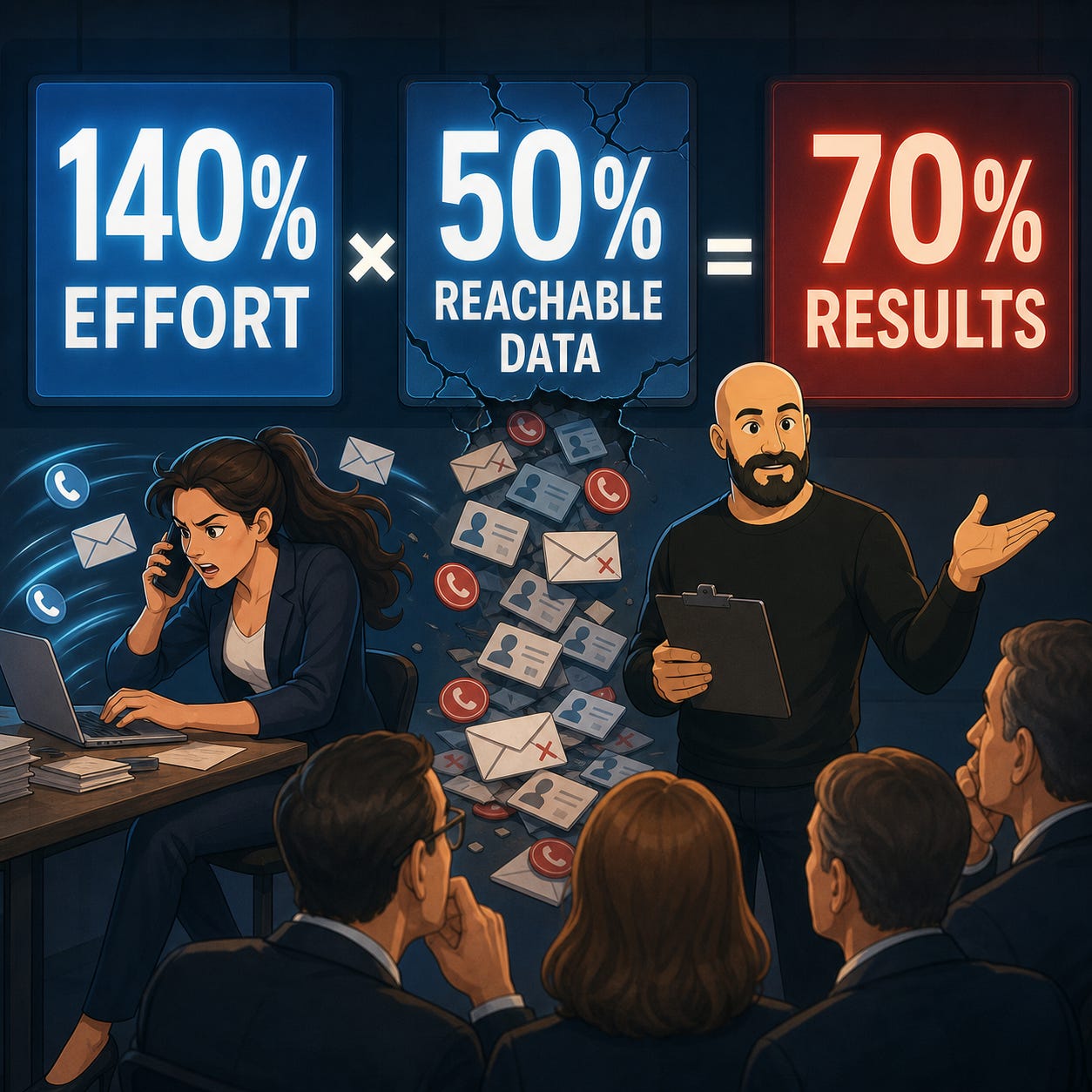
Let’s go back to the rep you were about to put on a PIP. This rep doesn’t have an effort problem. By all accounts he works 140% of effort vs other reps. But he’s doing it against a list that is half right. At best that looks like 70% of results. On the dashboard it looks like the rep sucks because effort doesn’t get a place on the KPI screen.
The CEO reads the dashboard and draws the conclusion that it’s time to PIP a few people and maybe the revenue leader isn’t doing such a great job either. Maybe she’s right.
Audit Yourself First and the Data Second
I consider myself a strong leader, but I wasn’t always. I have always done quite a bit of looking in the mirror but Kevin Dorsey’s BIPSY framework took my leadership up a notch (see image), and I stole it from him and I use it all the time.
Before you audit the underperformers, audit yourself.
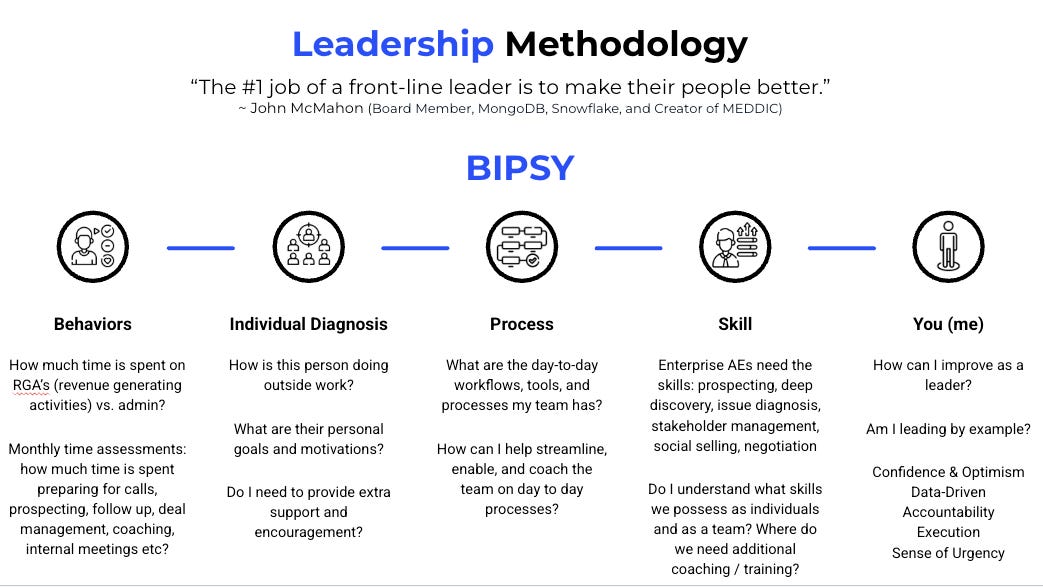
BIPSY forces a leader to ask whether the failure belongs to the rep or to the conditions the rep was handed.
Most of the time the honest answer points back up the org chart, at you and more specifically at the process you created or own.
So whenever I start an engagement, I make sure I have BIPSY front and center and then I go and audit the data.
We pull the ICP list, measure real reachability, flag what’s gone stale, and re-enrich it all if needed. It is unglamorous work, but it’s easy and cheap and almost always where the fastest gains hide.
You can run the best discovery training money can buy but it doesn’t solve for a rep dialing disconnected numbers.
FullEnrich runs waterfall enrichment across more than twenty data providers instead of betting the whole list on one, which is roughly the difference between reaching half your market and reaching most of it.
That red row might the hardest working rep in the building.
Audit yourself first, data second, and then we can talk about who is actually underperforming.
GTM is your only moat. Get it right. Or GTFO.
P.S if you want an intro to my friends at FullEnrich let me know. Happy to make an intro.
P.P.S If this was valuable, please share it , post it, comment on it, or DM me. GTM or GTFO comes out every Tuesday. See you next week.
Why GTM or GTFO Exists: The GTM is bar is low - big talkers, best practices and bullshit. Being elite is your moat. Do the work that matters and get sh!t done.